
In this article, we’ll explore what Rank Math can do, where its limitations lie, and which complementary tools—such as WordLift and CoSchedule —can fill those gaps.
What can Rank Math do?
Rank Math is a comprehensive SEO plugin for WordPress designed for both beginners and advanced users. Its core features include:
- On-Page SEO Optimizations: Rank Math offers detailed analysis tools for optimizing meta tags, keywords, and content structure.
- Schema markup: It supports the easy implementation of structured data, which is preferred by search engines.
- Integration with Google Search Console: This feature allows you to monitor performance data directly in the WordPress dashboard.
- SEO Analysis: Rank Math analyzes the SEO performance of content and provides detailed recommendations for improvement.
Although Rank Math covers many aspects of SEO, there are areas where specialized tools can offer additional value.
Where does Rank Math reach its limits?
While Rank Math is a versatile SEO tool, there are certain areas where it reaches its limits:
- Semantic SEO and knowledge graphs: Rank Math offers basic features for structured data markup, but it lacks in-depth semantic analysis and the ability to create knowledge graphs.
- Comprehensive Content Management: Rank Math does not include features for scheduling and automating content workflows or for integrating social media management.
These gaps can be addressed using specialized tools that, when combined with Rank Math, provide a comprehensive solution.
Schema Markup: Rank Math vs. WordLift
Rank Math offers basic features for implementing schema markup, which are sufficient for generating structured data for common content types such as blog posts, products, or events.
However, it reaches its limits when it comes to advanced semantic enrichment and the creation of complex knowledge graphs. WordLift, on the other hand, goes beyond these basic functions and creates detailed, semantically enriched markups that are specifically designed to improve topical relevance and visibility in search engines.
Why is WordLift’s schema markup better?
- Semantic depth: WordLift not only adds structural data, but also links this data contextually within a knowledge graph. This results in better indexing by search engines.
- Automated Content Links: WordLift uses Schema markup to automatically create internal links that are thematically relevant and improve SEO performance.
- Customization: WordLift offers more precise customization and advanced markup options tailored to specific content and entities.
Disabling Schema Markup in Rank Math
To avoid conflicts, you can disable schema markup in Rank Math:
- Go to the Rank Math settings: In your WordPress dashboard, navigate to Rank Math >, Titles & Meta.
- Disabling for individual posts or globally: If you want to disable Schema markup for individual posts, open the editor for the respective post, scroll down to the Rank Math meta box, and set the Schema Generator to “none.” To disable Schema markup globally, go to Rank Math > > Titles & Meta, select the category you want to customize, and under the “Schema” tab, select the “none” option.
- Save and Review: Save your changes and review the page for any technical issues or duplicate schema data.
”There's always room for improvement. If you're not satisfied with "good" and are constantly looking for ways to improve, then you should take a closer look at your content management.
Norbert Kathriner
WordLift: Semantic Enrichment and Knowledge Graphs
WordLift perfectly complements Rank Math by enriching content with semantic data and creating a customized knowledge graph. These features help improve the relevance and discoverability of content by highlighting relationships between topics and entities. WordLift also automates internal linking, which optimizes the user experience and increases time spent on the website.
Possible uses:
- Content enrichment: Automatically adding semantic markup and structured data.
- Internal linking: Improved user navigation through automated links between relevant content.
- SEO Performance: Increased visibility through better semantic context and topical authority.
CoSchedule: Efficient Planning and Automation
CoSchedule is a powerful tool for planning and managing content marketing strategies. It integrates seamlessly with WordPress and offers features such as a visual editorial calendar, automated workflows, and social media scheduling integration. CoSchedule helps organize content production and ensures that all content is published on time and to a high standard.
Possible uses:
- Editorial Calendar: Centralized planning and management of blog posts and social media content.
- Workflow Automation: Optimizing the content workflow through automated task assignment.
- Multichannel Management: Increasing Reach Through Integrated Social Media Posts.

- CoSchedule is ideal if you’re looking for a visual and comprehensive editorial calendar with automated workflows that also integrates social media planning.
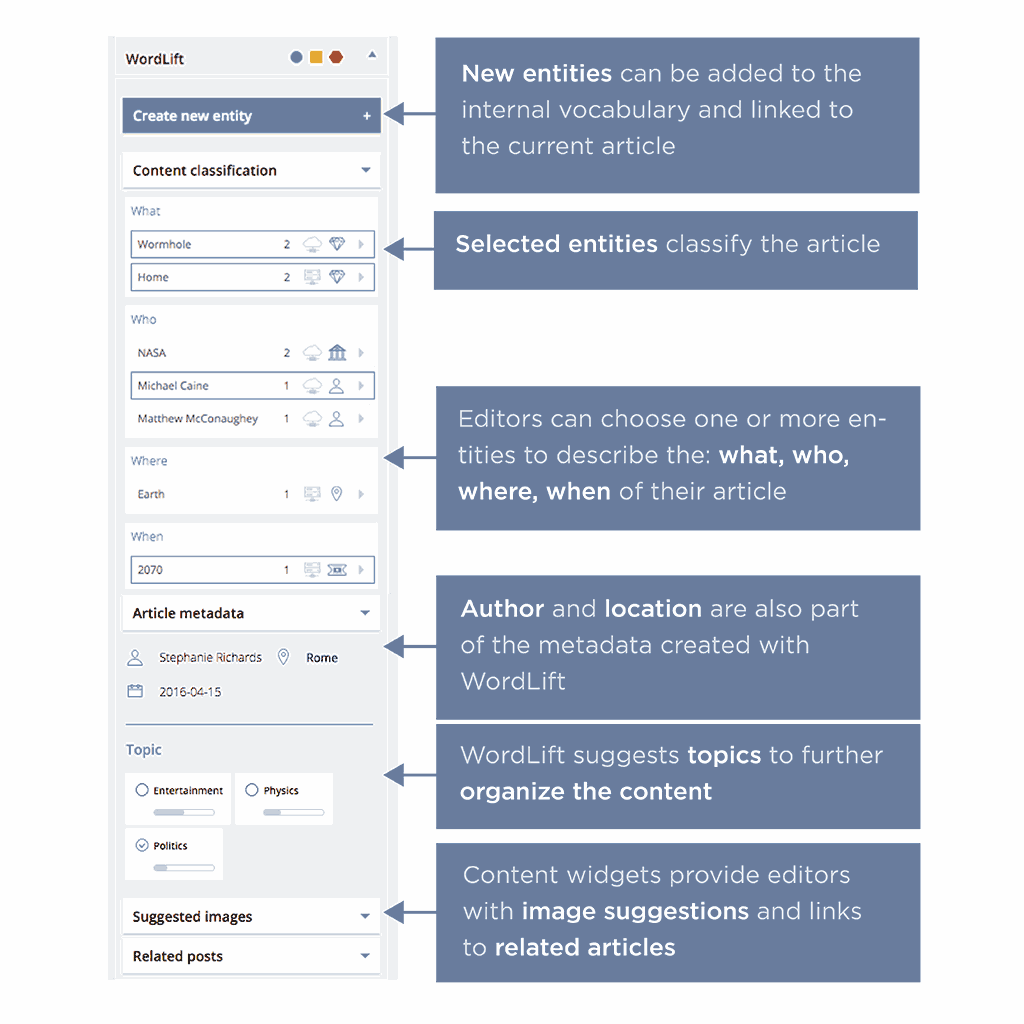
- WordLift is particularly well-suited if you prioritize semantic SEO and the creation of knowledge graphs to enhance the thematic depth and interconnectivity of your content.
Conclusion: The perfect combination for efficient content management
By skillfully combining Rank Math, WordLift, and CoSchedule, companies can develop a comprehensive content management strategy that covers all aspects of modern SEO—from technical optimization and semantic enrichment to efficient planning and automation.
Rank Math lays a solid foundation, while WordLift provides deeper semantic insights and CoSchedule optimizes content workflows. These tools complement each other seamlessly and offer a comprehensive solution for balancing efficiency and quality in content marketing.
Links to the Tools
Links
- AI Visibility
- Becoming Visible in ChatGPT – The Guide to AI Visibility
- Brand Management Through AI-Powered SEO – Understanding the Shift
- Brand Strategy – The 10 Best AI Tools for Brand Management
- Brand Management of the Future? The Role of SEO & AI
- AI Content Strategy: Why ChatGPT Alone Isn’t Enough
- AI Tools for Content Creation
- AI Communication That Moves People
- Workflow Automation with Make.com