

Your website should convey the same message about your company on every page, even in the data that only machines can read. That’s why I developed Aivis-OS: It delivers your verified information as domain-based structured data.
For companies that would rather be cited by AI than invented by it.
Deliver and inspect
“The authority to interpret begins with one’s own source.”
Norbert Kathriner
It hasn’t been named yet
An AI mentions your brand, praises your expertise, and attributes someone else’s product to you. Is that really good visibility?
An AI system might name the right company but include the wrong location. It might link to a source that doesn’t support its claim at all, or use a figure from the wrong year. The sentence still sounds flawless. What matters for your business is whether it’s correct.
Here’s my objection to GEO: The hunt for mentions puts the name in the window but rarely checks what’s actually inside the store. I can’t get behind that promise. Anyone who presents themselves in a better light on third-party platforms while leaving their own website inconsistent ends up with two versions. The old one remains accessible and can pop up in a reply at any time.
You can filter each glass individually. Or keep the source clean. In my case, I started with the source: On September 18, 2026, I had 57 old scripts containing structured data from 50 pages removed from my domain; four portfolio pages remained online. This creates space for the updated version. It’s not set up yet, though.
Here’s what you need:
- Your entities: people, organizations, products, and other important items, uniquely identified with names and relationships.
- Your data: structured information from the verified inventory, tailored to each page.
- Your forensic monitoring: an agreed-upon, ongoing review of your own source and selected AI responses. Forensic, because it doesn’t simply count mentions, but checks each response against your approved source and documents the findings.
Those who maintain their sources can investigate errors. Those who merely count mentions may even be pleased by the incorrect ones.
Request an Initial Consultation
Who or what is being referred to?
“We” is a handy word. It should just be clear who it includes.
On this website, I speak as Norbert Kathriner. Boutique für digitale Kommunikation GmbH is the company through which I work. I designed the architecture and methodology of Aivis-OS; epoint is responsible for software development and technical integration. These elements are interconnected. They are not interchangeable.
I demonstrated just how easily things can go awry. On my own website, I introduced a “hybrid AI team”—four agents with names. For humans, it was meant as a bit of fun. A machine, however, might interpret this as four employees who never actually existed.
That’s exactly what entities are all about: identifiable things such as a person, a company, a product, or a location. An entity can have multiple names, and two companies can have the same name. A list of spellings, therefore, is not enough. We specify who or what is being referred to and how these things are related.
What I’m going to discuss with you
Which people, organizations, products, services, and places are important for your presentation.
Which names refer to the same thing, which differences must remain, and which roles are conflated today.
Which relationships are documented, where they apply, and who currently maintains them.
You’ll receive an entity inventory.
It lists the key elements with unique identifiers, primary names, permitted variants, relationships, and sources. It incorporates what was previously decided and consolidated. If a role or name changes, it’s clear what has changed and when. The inventory applies to the entire agreed-upon domain, across pages and languages.
Data from a single source
A green checkmark next to the data format does not indicate whether the content is correct.
Structured data explicitly tells a machine what the text says: which organization offers a service, who wrote an article, and which product is being referred to. Formats like JSON-LD and Schema.org help you publish this information in an organized way. They don’t make the decision for you about what’s accurate.
If an old entry still lists you as a partner, the team page lists you as the owner, and an automatically generated data block lists you as an employee, you must first clarify when each role applies. After that, the entity inventory determines the display: a central registry of all approved information.
This is the key difference at the heart of Aivis-OS. Address-based plugins generate structured data from the text of each individual page. If a page says “we at Allianz,” it’s immediately clear whether it refers to Allianz SE or the Allianz Stadium.
Aivis-OS operates on a domain-based model. Once the domain is defined, it establishes which entity is being referred to and which information applies to it. From this, Aivis-OS derives a unique, coherent JSON-LD version for each page, all based on the same data source.
In my experience with the Aivis OS projects, address-based data is the second-largest source of new conflicts, right after the visible text. Existing schema outputs are therefore being harmonized or replaced. Having two independently maintained versions of the same facts would simply shift the conflict into the code.
Each page receives the information that pertains to it. A product doesn’t have to carry the entire history of your company, and its identity remains consistent nonetheless. We review the text and data together to ensure there are no discrepancies.
What I’m going to discuss with you
Which statements and relationships belong to which page, and where visitors can read them.
What data is currently generated by the content management system, extensions, or manual entries, and where they conflict.
How changes are approved and incorporated into text, data, and all affected pages.
You’ll receive consistent, structured data on the agreed-upon pages.
This data is derived from the verified inventory, technically verified, and reconciled with the visible content. You can see where each piece of information comes from and on which pages a change takes effect.
To Make Sure It Stays That Way
The new offering has been published. Its predecessor remains available on the old services page. Things like this happen without any ill intent.
People change roles, products change names, and figures change their validity periods. Search and response systems also change. We determine which discrepancies matter for your business and how they are identified and addressed.
We’ll arrange for ongoing review separately. In doing so, I distinguish between the source—which you can edit yourself—and the responses that external systems generate from it or from other material. This includes:
- Check Your Own Domain: Forensic monitoring scans your domain for new information that differs from the verified status.
- Verify key responses: For agreed-upon questions, we repeatedly verify whether classifications, relationships, supporting documents, figures, and dates are correct.
- Process findings: I classify discrepancies and determine whether a correction can be made to the content, the data, or an accessible third-party source.
Documented questions, systems, and measurement conditions ensure the consistency of the audits. Multiple measurement points reveal whether a finding recurs and how it evolves following a change.
Forensic monitoring is intended to help us make a decision: What is wrong, what can we correct, and what should we continue to monitor?
What I’m going to discuss with you
Which questions about yourself need to be answered correctly because trust or a business deal depends on them.
What is considered the correct answer, and how do we distinguish a factual error from a valid alternative?
Who reviews the test results, who decides on any changes, and when we’ll test again.
You’ll receive agreed-upon forensic monitoring with clearly defined responsibilities.
Aivis-OS documents the response checks in a certification report—a versioned audit report: What was tested, under what conditions, what is correct, and what discrepancies remain? Together with the audit of your own domain, this provides concrete starting points for corrections.
Aivis OS
With Aivis-OS, machine readability becomes a state that your company can establish, verify, and maintain.
How does a company keep track of everything its expanding domain claims? Aivis-OS was born out of this question. Today, it is the core of my work. Aivis-OS combines subject-matter expertise with proprietary software. The software finds, compares, and processes data. People decide what is valid. The audit is just the starting point. The end result is domain-based delivery: structured data that originates from the same entity inventory across all pages.
This is the path to Aivis-OS. We can incorporate preliminary work from the decision-making, consolidation, and development phases, as well as equivalent foundational elements from your company. We will clarify any outstanding decisions within the agreed-upon scope. The levels of Aivis-OS are interlinked:
- Identity: People, organizations, products, and other important entities are assigned unique identifiers and traceable names.
- Meaning: Statements and relationships are assigned a source, scope, and temporal context. Genuine conflicts are resolved, while legitimate differences remain visible.
- Content: Important statements are published in such a way that their meaning depends as little as possible on the layout or on distant sections of text.
- Delivery: The approved version is displayed in a structured manner on the appropriate pages and reconciled with the visible content.
- Verification: For defined questions, we repeatedly measure how AI systems represent identity, facts, and relationships. The results are incorporated into further work.
There are two steps to achieving this: first, resolve any contradictions, then fill in any gaps regarding the agreed-upon customer questions, both in the visible content and in the structured data.
A single discrepancy seems like a minor detail. An old founding year here, an earlier partner status there.
Next comes the to-do list. Every conflict recurs in many places. Experience shows that a medium-sized domain involves around 1,000 changes.
Only software makes this scale visible and correctable with a reasonable amount of effort. Nevertheless, the decisions are still yours.
The development process has an end, and you know it before it even begins. Afterward, ongoing support can maintain the status quo; adding additional products or languages constitutes a limited expansion. I don’t decide what a third-party AI system does with your source code. I make sure it’s correct.
Aivis-OS links the clarified statement to its publication and feeds identified errors back into the work at the source.
Request a Compact Audit for Aivis-OS
Here’s how I do it
First, we assess the scope of the task. Then we refine, supplement, deliver, and verify.
Positioning, content, and technical accessibility must underpin the delivery. Preparatory work counts, no matter who did it. Any missing foundational elements are clarified before they are turned into data.
- Determine the scope. The free compact audit identifies conflicting groups—that is, contradictory statements regarding the same set of facts—along with their sources. It assesses the key entities and provides concrete examples. This leads to the next assignment, with a binding cost cap.
- Decide and model. Names, statements, and relationships are compiled. You or the relevant experts resolve any outstanding conflicts. Implementation can be handled by your team or by me, based on task lists for each side. Afterward, we fill in any gaps regarding the agreed-upon client questions and review everything before delivery.
- Deliver and synchronize. The structured data is generated from this database. It is published on the website via an extension of your content management system, through your editorial team, or via an integration with your technology, depending on the environment. Existing data blocks are reviewed and replaced as needed. I then verify the quality, source, and consistency with the visible content.
- Verify and maintain. As part of ongoing support, new discrepancies are addressed. For agreed-upon issues, we define expected answers, a baseline measurement, and subsequent checkpoints. This makes it clear what has changed and what needs to be done.
“Complete” means: approved and verified. If the facts change, the next version begins.
Request an Initial Consultation
Where you can already see the work
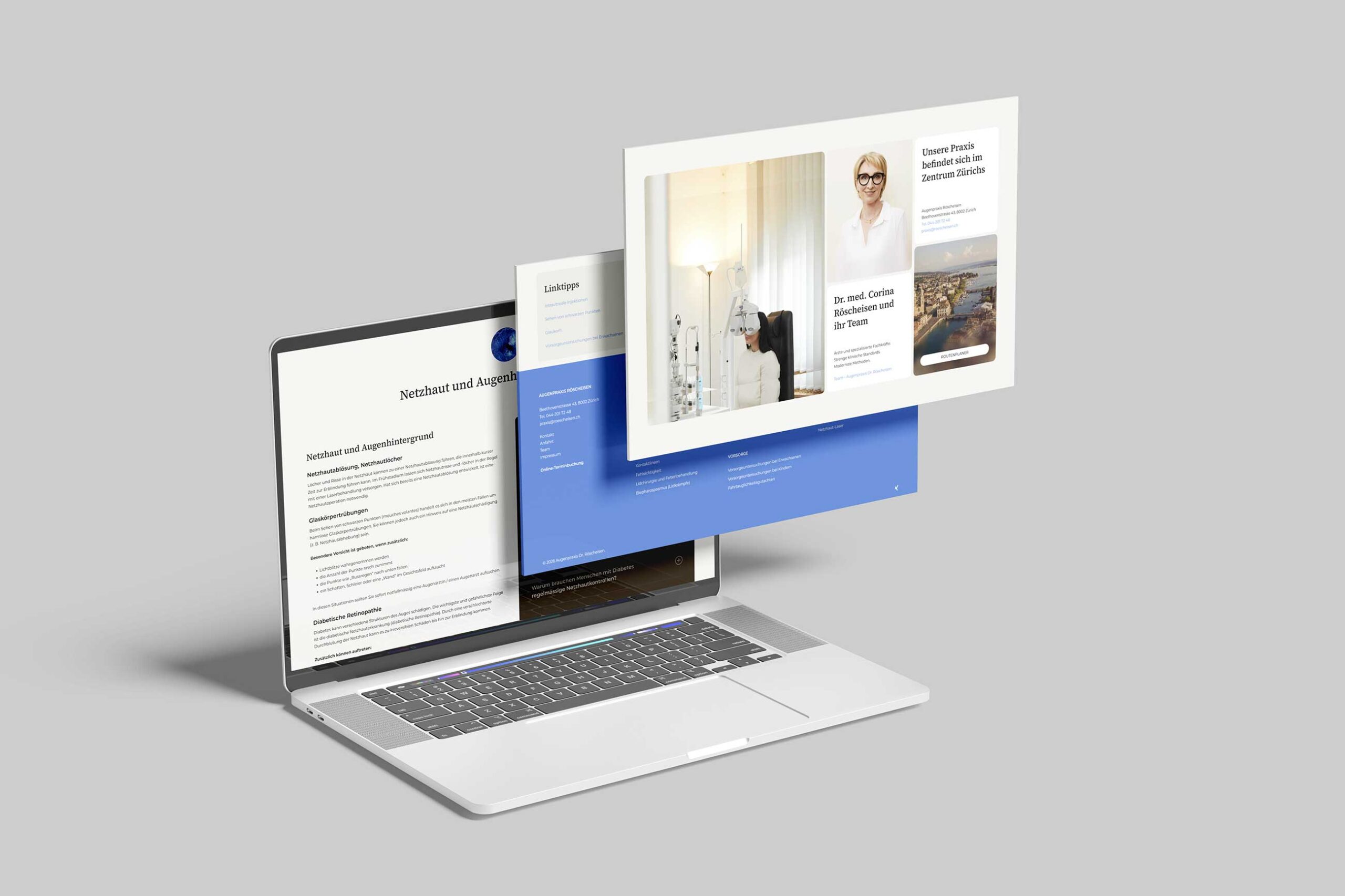
Röscheisen Eye Clinic
New content on patient questions, medically reviewed, followed by domain-based structured data using Aivis-OS: 42 page-specific outputs, completed on March 29, 2026. The Search Console report from September 21, 2026, shows 53,273 impressions in generative search features.
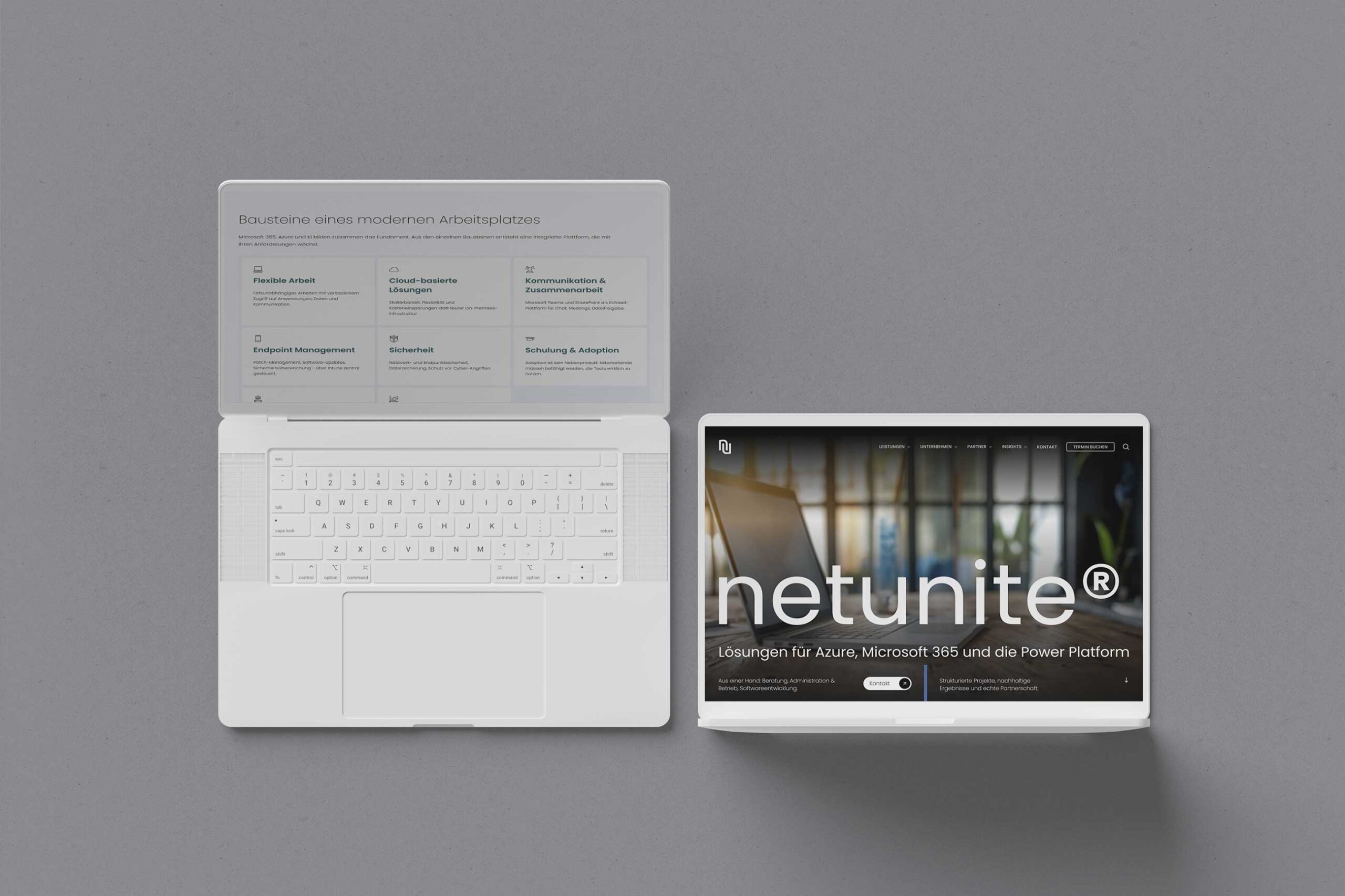
netunite AG
The July 2026 audit revealed conflicting information regarding Microsoft partner status. The company determined which information was valid, and the task lists for each address were implemented. A baseline measurement is planned before the structured data is imported.
Coming soon…
Right in the middle of it and almost done…
Questions and Answers
Why not just enable the Schema plugin on my website?
A plugin can output correct data. However, it does not determine which of two conflicting pieces of information is valid. That work must be done beforehand. In Aivis-OS, the approved data set determines the output; existing schema generators are either adapted or replaced. Two tools, each with its own fact management system, do not solve the problem, even if both are properly installed.
What does "forensic" mean in the context of this monitoring?
Monitoring can reveal mentions, sources, and changes. That’s useful. A forensic approach goes further: It doesn’t just count mentions, but checks each response against the approved source, documents the findings, and determines what happens in the event of a discrepancy. One approach checks your domain, while the other examines how external systems portray you. Without predefined questions, there is no reliable baseline measurement.
What happens if an AI system says something wrong about me?
First, I check the statement against the verified facts: Was a person mistakenly identified, a time period overlooked, or a connection incorrectly established? Then I look for clues in your source and, if necessary, in accessible third-party sources. We correct whatever is within your control and review it again. The exact cause of a modeling error cannot always be determined. This is also noted in the findings.
How quickly does it work?
Once published, your domain returns the new status. Neither of us can control when an external system retrieves it and uses it in responses. Nor can we control whether a provider uses it later for training purposes. For agreed-upon response checks, we therefore compare an initial measurement with subsequent measurement points. An improvement must be evident there.
Is this something for me?
If incorrect roles, outdated information, or unclear product relationships are costing your business money, it’s worth taking a closer look. The same goes if many people are managing the same online presence and no one has a complete overview of the entire setup anymore. More important than the size of your company is how many products, locations, and languages are involved—and how often the information changes. The free compact audit will show you what steps make sense in your specific case.
How much does it cost?
The compact audit is free of charge. You will then receive a quote detailing the scope of work, including a binding cost cap and a clear division of labor. The agreed-upon scope ends once the specified tasks have been completed and verified. We’ll discuss ongoing maintenance separately. Pricing details and product phases are available at aivis-os.com, where you’ll always find the most up-to-date information in one place.
How it all fits together.
Before that, decisions are made, ideas are refined, and concepts are developed. Here, all of that becomes a resource that you can maintain and review. For me, all of this together amounts to machine-readable brand communication.








We’ll determine what information and relationships your company needs to communicate reliably and where the current challenges lie. If Aivis-OS is a good fit, the free compact audit will help define the specific scope.
Let’s talk.
Norbert Kathriner
Digital Communication Boutique