

Your knowledge is more valuable than the number of pages you have. I sort through what remains, write down what’s missing, and provide evidence for your claims.
For companies whose history is longer than their current product or service offerings.
Compact
“Good content doesn’t start with text, but with attitude. And with the right question.”
Norbert Kathriner
What Has Accumulated
A website is like an attic. Over the years, things that don’t have a place anywhere else end up there. Eventually, no one knows what’s up there anymore. But a machine can still find it.
The article from back then appears alongside today’s offer. A services page describes a direction you left behind long ago. Or an old, undated price list: If an AI presents it as a current offer, your next customer conversation will start with a correction.
My own attic was well-stocked. My website continued to tell the story of an “agency for everything,” while Aivis-OS became the core of my work. On September 19, 2026, I set 27 of my German texts to “noindex”: They should no longer appear in search results. But the work isn’t done just by flipping that switch. What remains must also explain the new context.
Condensing, therefore, means more than just editing out content. Sometimes you need fewer pages. Sometimes you need a longer text, a better project history, or an answer that previously existed only in conversations with clients. In the end, what matters is whether your content answers the important questions. This results in:
- Your Table of Contents: what each page is for, what happens to it, and what’s missing.
- Your chain of evidence: which source supports which key claim and when it applies.
- Your new content: expertise, experience, and perspective, tailored for the readers who need it.
A well-organized website may still have little to say. That’s why writing is also part of the process of distilling content.
Request an Initial Consultation
What Pages Are Needed
Not every page has to sell something. But you should know why it’s there.
A services page explains what you offer. A case study shows how you solved a problem. A professional article helps with a difficult decision. A personal post shows how you think. These are different purposes, and that’s how it should stay. I won’t turn your website into a generic brochure with a contact form.
I check to see if each page fulfills its purpose and how the pages work together. Where is a statement explained, where is it supported, and where is it merely repeated? Two texts on the same topic aren’t automatically one too many: an overview and an in-depth analysis complement each other well. Conversely, two descriptions of the same offering that contradict each other require a decision.
Whether a text is valuable and whether it remains visible in search results are two different questions. A good, older text can be archived: readable, clearly identifiable as an older piece, and marked with “noindex” if necessary. Visitor numbers help in making the decision, but they aren’t the deciding factor. A high number isn’t a guarantee of its value, and a low number isn’t a reason to delete it.
What I’m going to discuss with you
Which customer questions each page answers and how it contributes to your positioning.
What’s current, what’s historically significant, what’s incorrect, and where multiple parties are doing the same work.
Which content reflects your experience, which leads to the offer, and which bridge is missing between the two.
You’ll receive a table of contents.
Each page of the agreed-upon inventory is assigned a task and a justified action: keep, revise, merge, archive, or remove. In addition, there are the questions your clients want answered before making a decision—questions that no page has answered so far—listed in order of urgency. This turns the inventory into a work plan.
What supports your statements
“We’re number one” is easy to say. The real question is: in what regard, and by what standard?
Evidence links a claim to something that actually supports it. When you cite a result, you state what was measured, when, and under what conditions. When you claim to have experience, you demonstrate it through tasks and projects. The commercial register confirms the existence of your company. Your specific problem-solving skills, however, are unlikely to be listed there.
Even a number doesn’t make a reference proof on its own. There can be many reasons for an increase in requests for a renovation. Anyone who attributes all of this to the new text is telling a convenient story—and possibly the wrong one. That’s why good references also show the starting point, the process, and the limitations.
When it comes to AI responses, I distinguish between four questions: Are you mentioned? Is the achievement correctly attributed to you? Is a source cited? Is the statement accurate? The last one is the one that matters. That’s why I focus on linking the statement, the evidence, and the context. I don’t decide whether an external AI system retrieves it—but I do ensure that it’s accurate.
What I’m going to discuss with you
Which of your key statements are facts, which are experiences, which are conclusions, and which are attitudes?
What documents, project results, or expert sources support them, and which of these may be made public.
What customers and partners confirm from their own perspective—and where the sources tell a different story.
You’ll receive a chain of evidence.
For every verifiable key statement, we document what supports it and what explanation it requires. I incorporate this connection into the texts: as a project history, as a contextual metric, or as a reference to a specialized source. Anything that isn’t substantiated is rephrased more precisely, identified as an assessment, or deleted. Your opinion doesn’t need anyone else’s permission. A factual claim needs a basis.
Knowledge Becomes Content
During the conversation, you answer questions for which your website simply lists “custom solutions.”
That’s exactly what I’m looking for. Why did you reject the obvious approach in a project? What mistake do you keep running into? When would you advise against your own offering? The answers often demonstrate more expertise than an entire page full of promises about what you can deliver.
At the Röscheisen Eye Clinic, it all began with a simple observation: When someone notices black spots in their field of vision in the morning, they don’t ask for the technical term. They ask about what they’re seeing. These questions, combined with the professional literature, gave rise to texts that the doctor reviewed and edited.
I have these kinds of conversations, listen, ask follow-up questions, and write about them. A conversation doesn’t prevent contradictions. Sometimes it actually brings them to light. A recorded response can be turned into a specialized article, a short audio clip, or a concise FAQ answer—each time editorially revised rather than simply transcribed. The result is:
- Guidance texts and expert articles that clearly answer an important customer question, using arguments, examples, and a clear connection to your offering.
- Precise answers that remain understandable even as a standalone section: who they’re intended for, when a statement applies, and where its limits lie.
- Content derived from spoken knowledge: Several podcast episodes can be turned into a white paper, and its core content can be expanded into a technical article or a series of short answers. The format adapts to the reader, while the subject matter remains the same.
A well-written text makes your experience accessible—even when the subject matter remains complicated.
What I’m going to discuss with you
What questions determine whether customers trust you, hire you, or keep looking?
Who can answer these questions based on experience, and what materials are helpful in doing so: projects, discussions, measurements, documents.
What story, what argument, and what format will make this knowledge accessible to your readers?
You’ll receive new content, fully developed.
Depending on the task, I’ll create new pages, technical texts, references, and answers that can be reused. I organize the arguments, write the text, develop image concepts, and produce graphic, audio, or video formats. Together, we’ll determine where each version will reach its readers. You’ll review the technical statements and draw the line between what you’re explaining and what you’re offering. This way, your company’s knowledge becomes a body of work with its own voice.
Here’s how I do it
Wir räumen den Dachboden auf, und was fehlt, schreibe ich.
Dafür brauchen wir eine geklärte Position und einen gemeinsamen Stand zu Fakten und Sprache. Hast du das schon, steigst du hier ein. Was fehlt, klären wir vor der Textarbeit, die davon abhängt.
- Inventory. I review the agreed-upon inventory and note topics, tasks, dates, recurences, and gaps. Search and usage data show what questions bring people to the pages.
- Assessment. We discuss the role of each page. What supports your current business? What tells a story worth telling? What needs to be corrected or replaced? And which missing content would be most valuable to add?
- Consolidation. I revise the agreed-upon texts, consolidate scattered statements, write references, and incorporate supporting materials. The content index identifies which pages will be merged later.
- New content. Discussions and research fill in the gaps, resulting in the agreed-upon new content. After you’ve reviewed it from a technical standpoint, we move on to development, where the content takes shape on the website.
In the end, you’ll know what your website is meant to convey, what it’s based on, and why its pages belong together.
Request an Initial Consultation
How Material Becomes a Statement
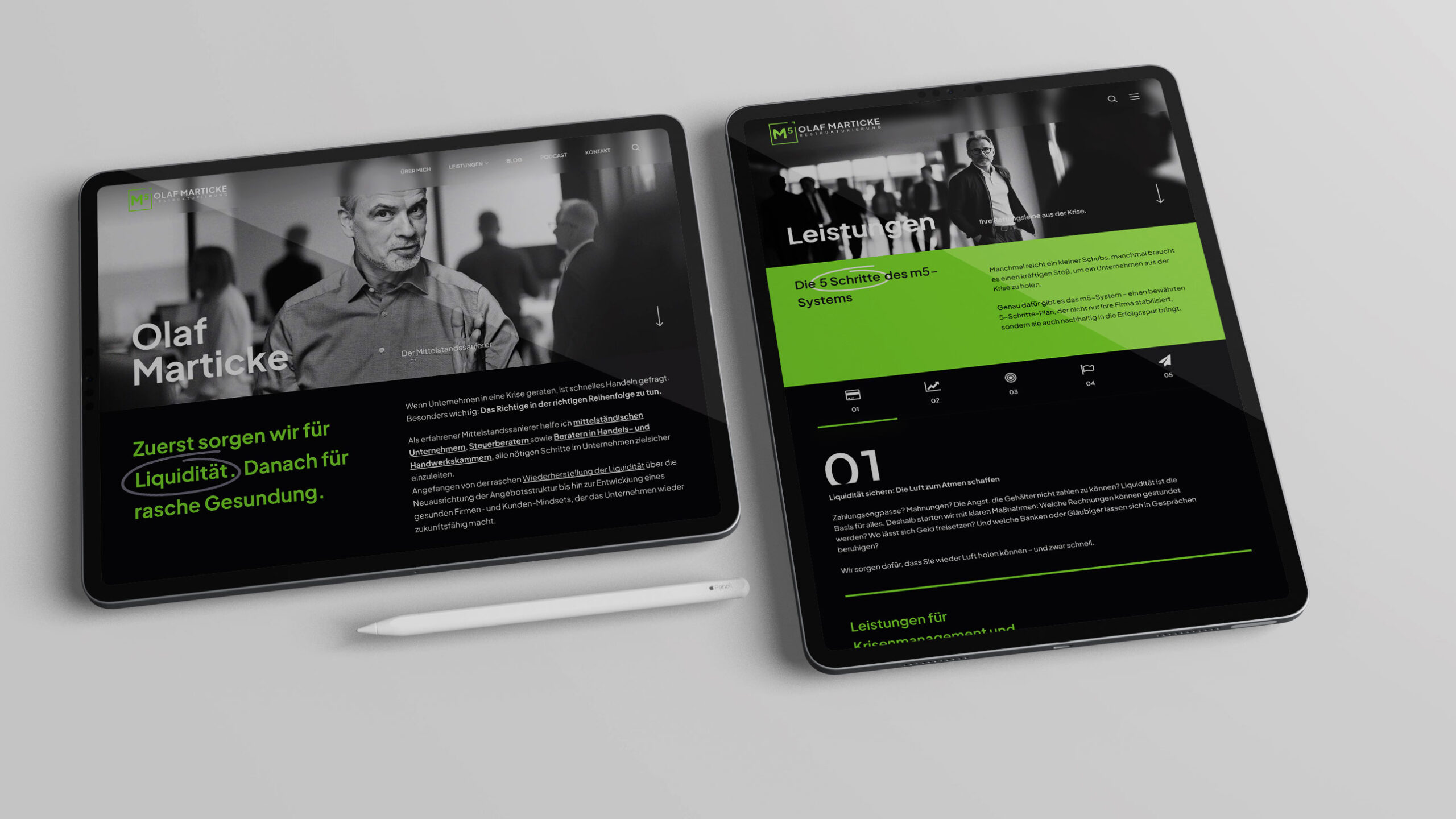
M5 Interim Management
Podcast episodes, expert statements, and market analyses were compiled into a standalone white paper on lead generation. The published project report states that it took 30 days. The knowledge was there. It just needed a format. 2025.
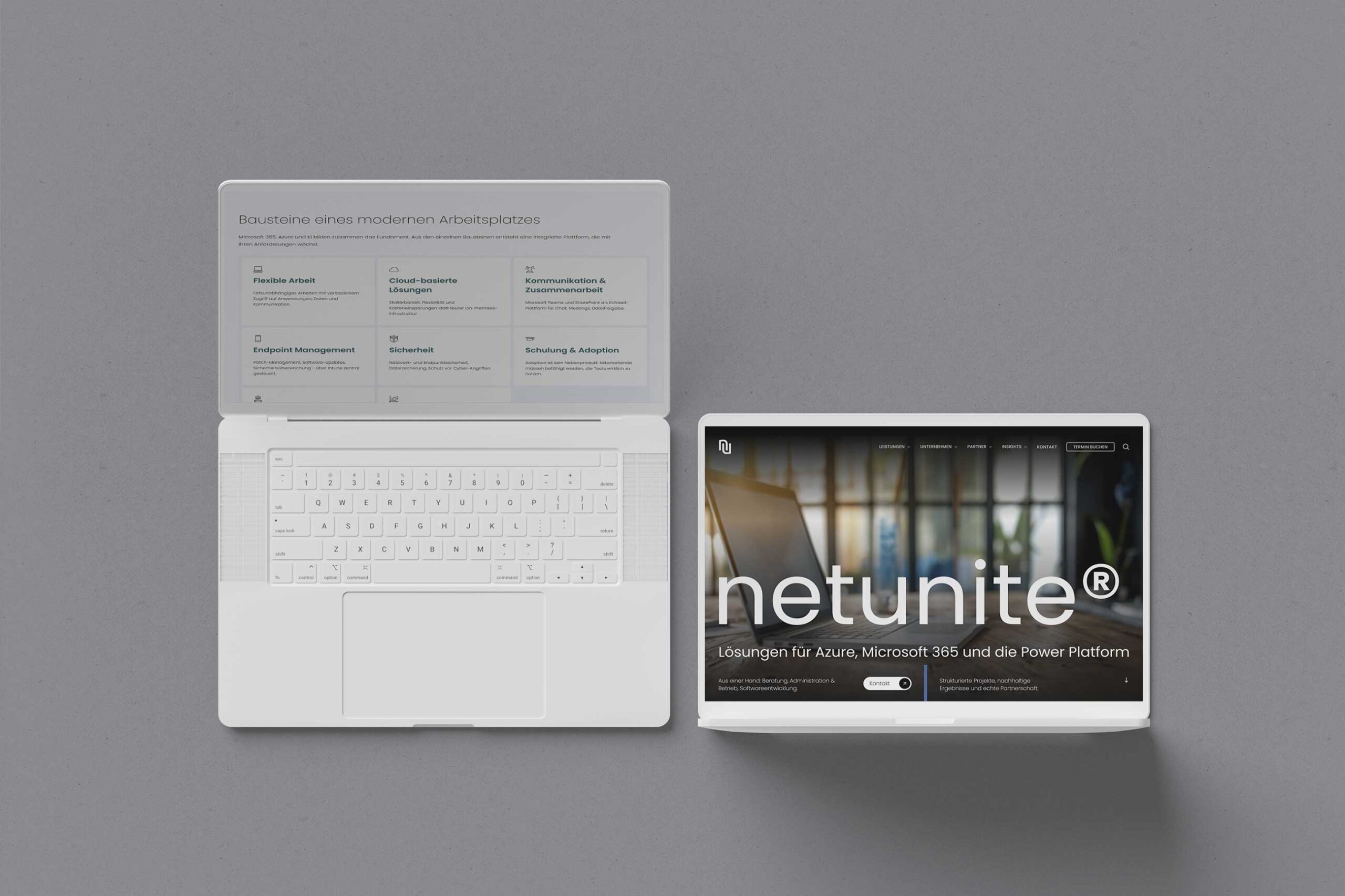
netunite AG
Old and new service pages appeared side by side; previous qualifications looked just like current ones. Reviewed using Aivis-OS, decided upon with the client, then implemented: twelve pages revised, 23 URLs redirected, 33 newsletter issues archived by date. 2025 to 2026.

This website
My own attic isn’t completely tidied up yet. Of the texts I set to “noindex” in September 2026, one redirects to an English version that remains accessible to search engines. Loose ends like these also belong in the table of contents.
Questions and Answers
Do I have to delete content?
Sometimes. Other texts are revised, merged, or preserved as stories. It depends on their value and purpose. If a public page is no longer supposed to appear in search results, this is controlled by a directive such as “noindex.” This does not block AI systems. An old page is only redirected if there is a suitable successor.
What is a machine receipt?
A better question would be: What evidence is there to support this statement in the first place? A dated report can support a key figure, a documented reference can support a project outcome, and a registry can confirm legal identity. The author and date help with attribution, but they do not make the content correct. For machines, the connection between a statement and its source must be traceable and understandable. Whether a particular system uses this information is up to the system itself.
Why can a text with a lot of visitors be a problem?
Maybe it attracts exactly the right prospects. Maybe it attracts people you have nothing to offer. Maybe it reveals an important aspect of who you are. You have to take a look at it. A text becomes a problem when it raises outdated expectations, spreads misinformation, or overshadows your current offering. Visitor numbers are a clue, not a diagnosis.
What will happen to my blog?
It will have a clear editorial structure. Expert articles explain, references provide evidence, and opinion pieces show how you think. Important posts are linked to the relevant service and topic pages; outdated ones are corrected or clearly marked as such. A blog should remain lively and diverse. However, organizing content by date rarely helps readers find what’s important.
How much new material do I need?
As much as the open questions require. Sometimes a focused conversation provides material for several good articles. Sometimes it’s only then that we realize what research, project documentation, or measurements are missing. We agree on the necessary content, draw on existing knowledge, and refine the answers both substantively and linguistically. The value of a conversation is determined by its content, not by the stopwatch.
Will I lose my rankings if I remove pages from the index?
For these pages, yes—that’s the goal. This can also eliminate the need for visitors and inquiries. That’s why we first evaluate their value, backlinks, and alternatives. Often, valuable content can be reorganized or improved. Having fewer pages in the index isn’t a success in and of itself. What matters is whether the remaining pages better explain your business.
What’s Next.
First: decide what you stand for. Then: develop content that both people and machines can read. For me, that’s what I call machine-readable brand communication.








Before our conversation, I’ll read through some of your most important content. Then we’ll start with a simple question: Does a potential customer find enough there to understand why they should hire you specifically?
Let’s talk.
Norbert Kathriner
Boutique for Digital Communication